A Room-by-Room Reset for Household Clutter
Follow a clear route from the entryway through the kitchen, living room, bedroom and bathroom, with practical decisions for each space.
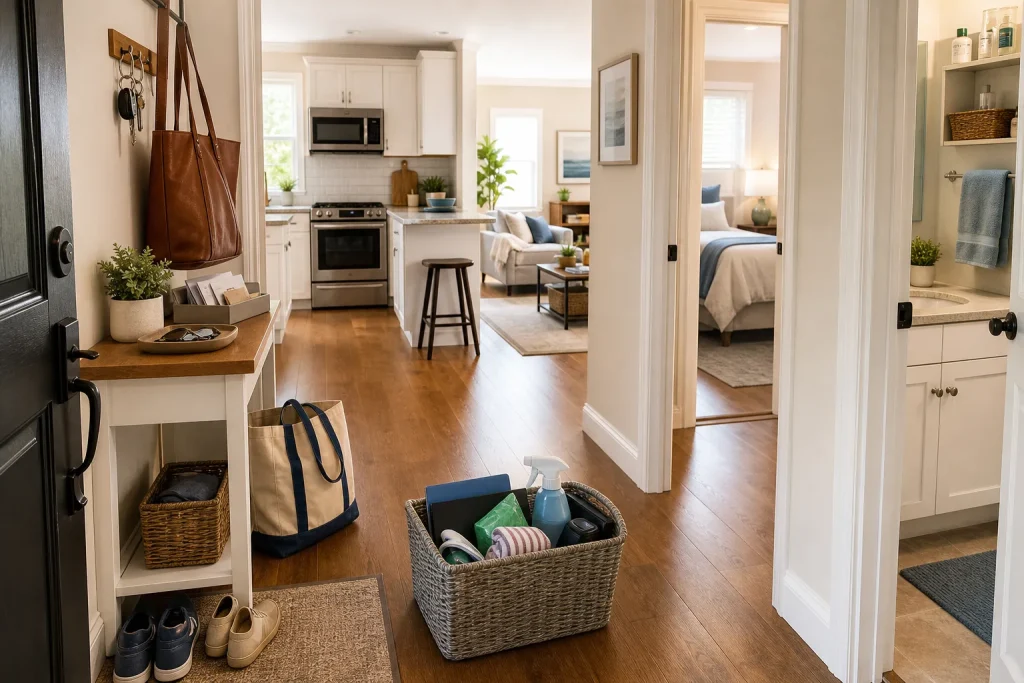
Follow a clear route from the entryway through the kitchen, living room, bedroom and bathroom, with practical decisions for each space.
Home Life · 6 min read
A pair of shoes blocks the front door while a shopping bag leans against the hall table. Before the day gets going, the route through the house is already negotiating with yesterday’s errands. A room-by-room reset works best when it follows the way you move through the home, giving each space a clear task and a place for the things that belong there.
Start at the entrance and move towards the rooms where daily routines happen. Use the same basic method in each: define a small area, sort what is there, return items to their proper homes, and check that the room’s usual task is easier. Think of the sequence like putting tools back in a toolbox: each one should be reachable where the work starts, rather than scattered wherever it was last used.
Prepare the Route
Set out a carry basket, a rubbish bag and a recycling container. Choose one small surface or patch of floor at a time; do not empty a whole room onto the nearest bed. Use simple categories: stays here, belongs elsewhere, donate or give away, recycle, and rubbish.
For anything that belongs elsewhere, name its destination. Put items in the carry basket and deliver them when you reach that room. Keep the basket as a temporary route, not a new address. If an item needs a decision, set it aside with a specific next action rather than adding it to an indefinite “maybe” collection.
Clear the Entryway
Begin by opening the walking route and door. Group the shoes, bags, mail and keys that have collected there, then decide which ones support the daily routine. Keep frequently worn shoes and the bag used most often near the entrance; move occasional footwear to its proper storage place.
Give keys a tray or hook close to the door. Put incoming papers in one designated spot, separate from rubbish and recycling. If the available shelf cannot hold both keys and papers without crowding, use a wall hook for the keys or choose a tray with separate areas. The result should be a clear route and a known place to look, not a small obstacle course with labels.
Reset the Kitchen
Move the carry basket to the kitchen and return any items that belong there. Put away food and dishes, then clear the work surface used for meal preparation. Keep daily-use utensils close to the area where you cook, and store rarely used equipment in a cupboard rather than on the counter.
Check the sink, counter and floor for items that belong elsewhere. If an object has no sensible kitchen home, decide whether it is useful in another room or ready to leave the house. The kitchen is reset when the main preparation area is usable and stray items have a clear destination. A clear patch of counter is more helpful than a collection of storage containers arranged for inspection.
Settle the Living Room
Next, gather mugs, books, blankets, remotes and charging cables. Return dishes to the kitchen, put books where they are read or stored, and give blankets a basket or shelf near the seating they serve. Keep remotes together in a small tray if that is where people naturally look for them.
Clear the chair or sofa needed for sitting, then check the floor and the path through the room. If cables are used there, keep the relevant ones together near the device they serve and remove cables whose purpose is unknown from the everyday area. Put uncertain cables in a clearly marked holding container only if you can identify a later action, such as matching them to a device.
Restore the Bedroom
Carry the basket into the bedroom and return its contents to their homes. Put worn clothes in the hamper, clean laundry in its drawer or wardrobe, and items that belong in another room back in the basket for the next stop. Clear the bed and the route to the wardrobe so the room is ready for its ordinary use.
Keep items used at bedtime within easy reach, but avoid turning the bedside table into a second general-purpose shelf. If a drawer will not close without rearranging its contents, remove items that belong elsewhere or are no longer needed there. Give sentimental objects a deliberate place; they need not be discarded simply because they are not practical.
Finish in the Bathroom
Collect toiletries, towels, laundry and empty packaging. Put daily-use toiletries together where they are used, hang or store towels in their usual place, and move laundry to the hamper. Recycle or discard packaging according to local arrangements, and return anything that belongs in another room to the carry basket.
Check whether the basin and the space needed for the next routine are clear. If a cupboard is too crowded to return an item easily, reduce the contents or choose a simpler arrangement. Keep any medicines in their proper packaging and follow their labels; ask a pharmacist or another qualified professional if you are unsure how to store or dispose of them.
Work Through One Example
Say you have limited floor space at the entrance, with several pairs of shoes, two reusable bags, scattered mail and keys that often go missing. The starting point is a doorway that is awkward to pass through, no spare cabinet and one existing shelf. The aim is to clear the route without buying storage furniture.
First, keep the shoes used most often on the mat and carry occasional pairs to the bedroom wardrobe. Next, fold the reusable bags together and put them in an existing cupboard. Then place the mail in one tray on the shelf and the keys in a small dish beside it. Recycle packaging and put any papers requiring attention together in a separate, clearly named folder.
The expected result is a more passable doorway and a consistent place to look for keys. The tradeoff is that occasional shoes and bags are less convenient to reach. If the tray and dish crowd the shelf, move the keys to a hook or use one divided tray; if neither option fits, keep the mail elsewhere and preserve the shelf for the items needed at the door.
Keep the Reset Small
After the room-by-room pass, choose a short routine tied to something already happening. After cooking, return ingredients and wipe the preparation surface. Before bed, put obvious items away and clear the surface needed first thing in the morning.
Notice where clutter returns. If items repeatedly land beside their assigned homes, the container may be too far away, too full or awkward to use. Move it closer, reduce what it holds or choose a simpler option. For consequential paperwork, use sensible caution and consult a qualified professional when the decision requires it.
When the house drifts again, restart at the entrance and follow the same route, but limit each stop to the area that needs attention. If the carry basket fills before you reach the next room, deliver its contents before adding more. That small pause keeps the route useful and stops the basket from becoming the house’s most successful permanent resident.