How to Build a Flexible Pantry Meal Without a Fixed Recipe
Use a staple, a deliberate source of flavour, and ingredients that suit the meal. Choose a skillet, pot, or toast according to what needs cooking, then store leftovers safely.
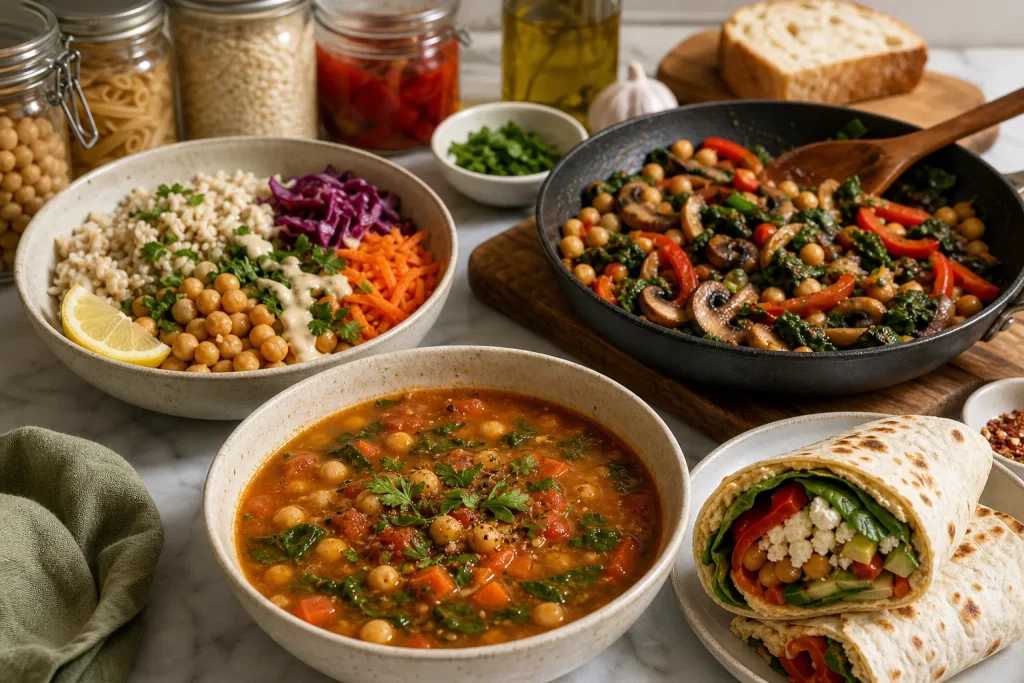
Use a staple, a deliberate source of flavour, and ingredients that suit the meal. Choose a skillet, pot, or toast according to what needs cooking, then…
Food · 8 min read
A can of chickpeas, a heel of bread, and half a jar of roasted peppers can become dinner without anyone consulting a recipe. Give each ingredient a job: a staple provides substance, a flavour source sets the direction, and other ingredients add texture or freshness. The pantry then looks less like a collection of unrelated containers.
This is not an invitation to combine every open packet in the cupboard. It is a way to make a few decisions in a sensible order. A warm bowl or skillet, a soup or stew, and toast or a wrap cover many situations, each with different demands on time, attention, and washing-up.
Choose the meal structure
Start with a staple that can carry the meal: rice, pasta, noodles, potatoes, bread, beans, lentils, or canned chickpeas. Eggs can also be the main ingredient. Choose something you can prepare with the tools and time available; dry beans are not a spontaneous substitute for a tin if they have not been soaked or cooked.
Pick one main flavour source. Tomato paste, soy sauce, curry paste, miso, salsa, pesto, olive spread, stock, or oil with garlic and dried herbs can each point a meal in a useful direction. Several can work together, but each needs a reason. The pantry does not award points for using everything at once.
Look for a supporting ingredient that brings contrast: something soft with something crisp, rich with bright, or mild with savoury. Frozen peas, cabbage, carrots, mushrooms, pickles, nuts, canned corn, lemon, vinegar, and fresh herbs can all help. Check that each ingredient is in good condition and appropriate for the meal; discard spoiled food rather than trying to disguise it with seasoning.
Put the staple, flavour source, and a couple of possible additions on the counter before cooking. This quick inventory makes it easier to notice whether the plan is balanced, and reduces repeated trips to the fridge, as if another shelf might have appeared.
Use a skillet or bowl
A skillet suits ingredients that cook quickly or are already cooked: canned beans, leftover rice, frozen vegetables, sliced cabbage, mushrooms, or cooked meat. A bowl works when components need separate preparation, as with rice topped with seasoned beans, chopped vegetables, and sauce. Both keep ingredients distinct rather than turning everything into one texture.
For a skillet, heat a little oil and cook firm raw vegetables first. Add softer vegetables and cooked or canned staples later. Stir in the flavour source with a splash of water, stock, or cooking liquid so it coats the ingredients rather than scorching. Taste before adding salt: soy sauce, miso, olives, and prepared sauces may already be salty.
For a bowl, cook the staple separately if needed. Warm beans or vegetables in a small pan with seasoning, then assemble. A sauce can join the components: tahini thinned with water and lemon, yoghurt with herbs, or peanut butter loosened with warm water and soy sauce. Add liquid gradually; a sauce that begins as a spoonful need not become a soup because the bowl looks thirsty.
This approach suits cooks who want distinct textures and can manage a pan or two. It is forgiving when ingredients are already cooked, but preparing the staple and topping separately can leave extra equipment to wash.
Bring ingredients together
Soup or stew suits compatible ingredients, a liquid base, and a little time for flavours to mingle. It works well with dried lentils, chopped root vegetables, canned beans, and small amounts of leftover vegetables. A pot can make a modest amount of each feel like a coherent meal.
Soften onion, garlic, celery, or carrot in oil, if available. Add a concentrated flavour source such as tomato paste, curry paste, paprika, or dried herbs and stir briefly. Pour in stock, water, canned tomatoes, or a mixture. Add ingredients according to their cooking needs: firm raw vegetables and lentils earlier, canned beans and tender greens later. Pasta and rice can go in too, but they absorb liquid as they cook and thicken the soup as it stands. Keep extra hot water or stock nearby if you want a looser result.
Season in layers. Add a little salt or salty condiment, simmer, then taste. Finish with something bright or fresh if available: lemon juice, vinegar, chopped parsley, yoghurt, or chopped pickles. A final contrast can make the pot taste more considered without adding another complicated component.
Soup suits a cook with a pot and time for a simmer. It is less suitable when the vegetables need very different cooking times and there is little appetite for managing them. It can also obscure texture, so hold back toasted seeds, croutons, or chopped spring onions until serving if crispness matters.
Make toast or wraps
Toast, flatbread, and wraps turn a small quantity of prepared food into a meal with little extra cooking. They work with hummus, canned beans, tuna, leftover roast vegetables, cheese, eggs, avocado, or a thick spread. Bread is the staple; the spread or seasoning supplies flavour; crisp vegetables, pickles, herbs, or seeds add contrast.
Consider moisture before assembling. Wet ingredients can make bread limp, so drain beans and canned vegetables, pat wet greens dry, and keep juicy toppings on the surface rather than against the bread. A thick spread such as hummus or mashed beans can act as a barrier. Warm a wrap in a dry pan if it needs softening, add fillings in a compact line, fold the sides in, then roll.
This works when a spreadable or ready-to-eat ingredient is available and you want to avoid cooking a separate staple. The meal may feel incomplete if the filling is mostly spread, so add something substantial, such as beans, egg, cheese, or cooked vegetables, and something sharp or crisp. Bread with good intentions is still bread.
Match method to ingredients
Ask what needs to happen to the ingredients. If most are cooked or need only a brief fry, choose a skillet or bowl. If firm ingredients need time in liquid and would benefit from sharing flavour, choose soup or stew. If the main components are ready to eat and can sit on bread, use toast or a wrap.
Then consider how much attention the meal needs. A skillet calls for occasional stirring and some timing. Soup needs a longer simmer but can be left alone for stretches once stable. Toast or a wrap is quick when the toppings are ready, but offers less opportunity to soften raw ingredients or blend flavours. Choose the method that suits the food you have, not the one that makes the pantry sound impressive.
Check the balance: is there a filling base, a clear flavour source, and a contrast in texture or taste? If the meal has no contrast, add something crisp, acidic, fresh, or creamy. You rarely need all four. A squeeze of lemon, a spoonful of yoghurt, or toasted seeds can do more than another round of seasoning.
Work through one meal
Imagine you have cooked rice left from an earlier meal, a tin of chickpeas, half a jar of roasted red peppers, a small onion, plain yoghurt, and one skillet. These are invented starting inputs. You want dinner without cooking another grain, so choose a skillet topping for the rice: the chickpeas are ready to heat, and the peppers need only warming.
Slice the onion and cook it in a little oil until soft. Add a spoonful of tomato paste and a pinch of cumin, stirring briefly; these are illustrative quantities, not fixed requirements. Add drained chickpeas and a splash of water, then heat until hot. Fold in strips of roasted pepper and taste before adding salt. Warm the rice separately in a microwave or covered pan with a little water.
Thin the yoghurt with lemon juice if a lemon is available; otherwise, use a little water and taste before seasoning. Serve the chickpeas and peppers over rice with the yoghurt on top. The result has a substantial base, a savoury topping, and a cool contrast. The tradeoff is an extra vessel for the rice; if avoiding that matters more, warm it in the covered skillet first, set it aside, then cook the topping in the same pan. Without tomato paste, use a little pepper-jar liquid and rely on onion and cumin; the flavour will be milder, but the meal still has a clear structure.
Adjust as you cook
If a dish tastes flat, add a little acid or salt, then taste again. Lemon juice and vinegar sharpen flavours; soy sauce, miso, olives, and cheese add savoury saltiness. If it tastes too sharp, a little fat, dairy, or a mild staple can soften the edge. If it feels heavy, add something fresh, crisp, or acidic rather than more of the same rich ingredient.
If the texture is wrong, change the method rather than piling on seasoning. Thin a thick mixture with water or stock. Let excess liquid cook off in an uncovered pan. Add soft ingredients late to keep them from collapsing, or finish with nuts, seeds, raw vegetables, or toasted bread for crunch. Keep raw and cooked foods separate as appropriate, and follow safe handling guidance for meat, fish, and eggs.
Store leftovers safely
For cooked leftovers, use a clear household rule: refrigerate promptly, keep them covered, and use them within two days. The UK Food Standards Agency advises cooling cooked leftovers and refrigerating them within one to two hours, then eating them within two days or freezing them. Follow local public-health guidance if you live elsewhere, and use stricter instructions on food packaging where applicable.
Divide a large pot into smaller, shallow containers so it cools more readily, and keep crisp toppings or sauces separate from bread. Reheat leftovers until steaming hot throughout, and reheat only once. If food has been left out too long, storage conditions are uncertain, or it is intended for someone more vulnerable to foodborne illness, seek advice from the relevant local health authority rather than relying on smell alone.
A flexible pantry meal comes down to a few practical choices: pick a staple, choose one flavour source, decide whether the ingredients belong in a pan, a pot, or on bread, and add a contrast. Keep dependable seasonings, canned beans, grains, and shelf-stable sauces on hand, but let the food in front of you decide the format. Before putting leftovers away, make space in a shallow container; tomorrow’s lunch is easier to plan when it is not hidden at the back of a pot.